Learn how RV camper solar panels work, what you need to get started, and how to power your campsite without relying on shore power.
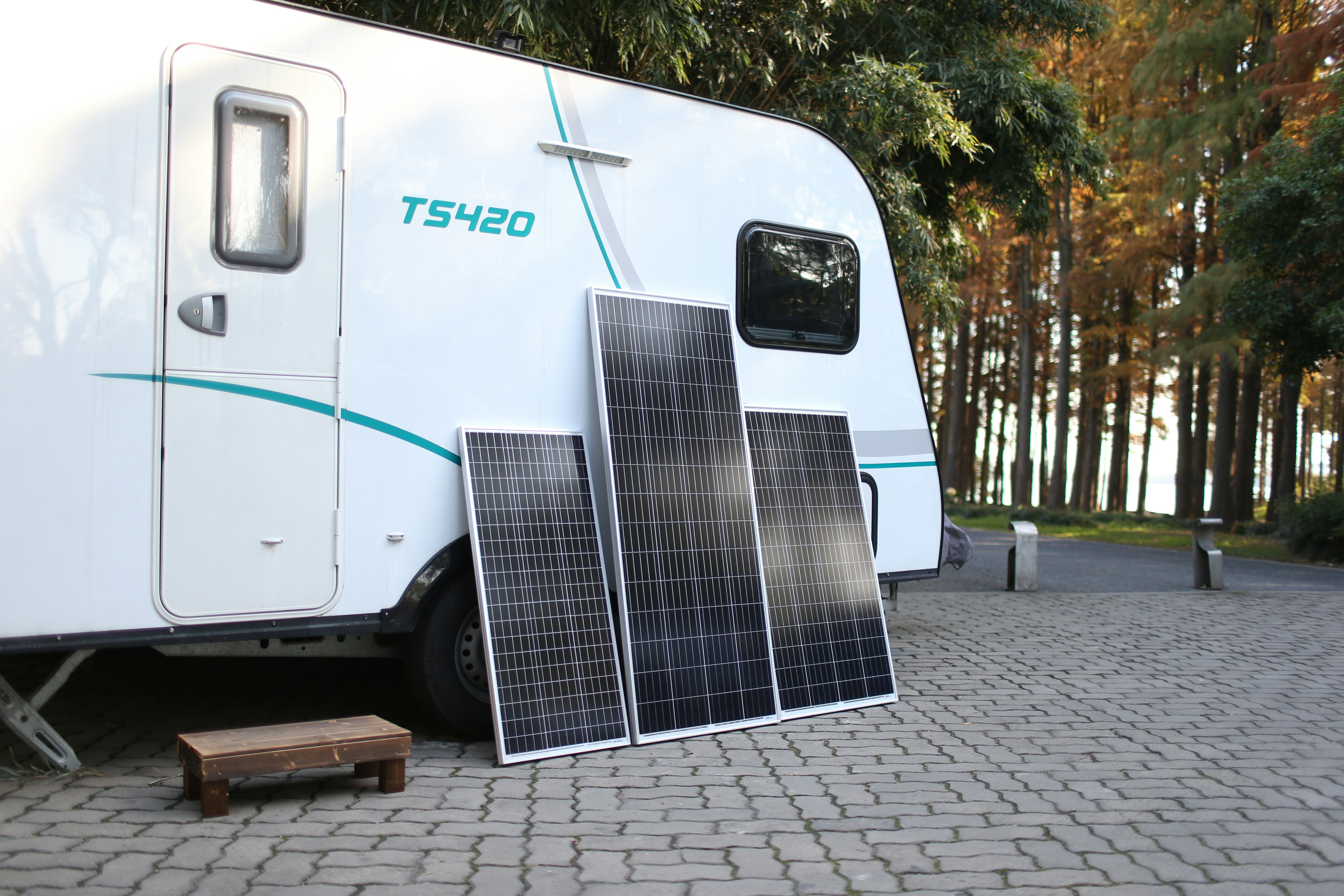
If you have ever sat at your campsite and watched your phone battery drop to 10% while you are miles away from an outlet, you already understand why rv camper solar panels are such a big deal. Solar power is not just for tech enthusiasts or off-grid survivalists. It is for anyone who wants a little more freedom and a lot less stress when they are out camping.
This guide breaks it all down in plain language. No engineering degree required.
What Solar Power Actually Does for Your RV
Think of solar panels as tiny power plants sitting on your roof. They take sunlight, turn it into electricity, and send that electricity somewhere useful — like your lights, your fan, your phone charger, or your coffee maker.
Without solar, you are completely dependent on shore power (a hookup at the campground) or a noisy generator. With solar, you have a quiet, free source of energy that works as long as the sun shows up for work.
For campers staying at a full-service campground like Lamb City Campground, solar is a great backup and supplement — especially if you are parked in a shady spot or want to reduce how much you lean on hookups. For campers who prefer longer or more remote stays, solar can be the difference between roughing it and actually enjoying yourself.
The Four Main Parts of an RV Solar System
You do not need to memorize every component, but understanding the four main players will help you make smarter decisions when shopping or troubleshooting.
Solar Panels
These are the flat, dark rectangles mounted on your RV roof. They absorb sunlight and produce what is called direct current electricity, or DC electricity. There are three common types:
- Monocrystalline panels — the most efficient and the most popular for RVs. They perform well even in lower light conditions.
- Polycrystalline panels — slightly less efficient but often cheaper.
- Flexible panels — great for curved roofs, though they tend to wear out faster.
For most beginner RV setups, monocrystalline panels are the go-to choice.
Charge Controller
Raw electricity coming straight from solar panels is not campground-ready. It is inconsistent and can actually damage your batteries if it flows in unchecked. The charge controller acts like a traffic cop — it regulates how much power goes into your batteries and keeps everything running safely.
There are two main types: PWM (Pulse Width Modulation) and MPPT (Maximum Power Point Tracking). MPPT controllers are more efficient and worth the extra cost if you are serious about solar.
Battery Bank
Your solar panels only produce electricity when the sun is out. Your battery bank stores that electricity so you can use it at night or on cloudy days. This is the heart of your whole system.
Common battery types for RV solar include:
- Lead-acid batteries — affordable and widely available, but heavier and require more maintenance.
- Lithium iron phosphate (LiFePO4) batteries — lighter, longer-lasting, and more efficient. They cost more upfront but pay off over time.
The size of your battery bank determines how long you can run your appliances without the sun. A small setup might power lights and phone chargers overnight. A larger one can run a refrigerator, a fan, and a television without breaking a sweat.
Inverter
Most appliances in your RV run on alternating current electricity, or AC electricity. But solar panels produce DC electricity. The inverter converts DC to AC so you can plug in regular household devices.
If you only plan to charge phones and run 12-volt appliances, you might not need an inverter at all. But if you want to run a microwave, a laptop, or a coffee maker, an inverter is non-negotiable.
How It All Works Together (Step by Step)
Here is the full journey of solar electricity in plain terms:
- Sunlight hits the panels. The panels produce DC electricity.
- DC electricity flows to the charge controller. The controller regulates it before sending it to the batteries.
- Batteries store the electricity. You now have a reserve you can draw from anytime.
- When you need power, it either flows directly as DC (for 12-volt devices) or passes through the inverter to become AC (for standard appliances).
- Rinse and repeat. As long as the sun rises, the cycle continues.
It is like a water tower. Solar panels fill the tower (batteries) during the day, and you draw from it whenever you need water (power). When the tower runs low, you wait for the next sunny day to refill it.
How Much Solar Do You Actually Need?
This is the question everyone asks and no one loves answering because it depends on your setup. But here is a simple way to think about it.
Step 1: List your appliances and their wattage.
ApplianceApproximate WattageLED lights (4 bulbs)20–40 wattsPhone charger5–20 wattsLaptop45–65 watts12-volt fan15–35 wattsMini fridge30–60 wattsCoffee maker600–1,200 watts
Step 2: Estimate how many hours per day you use each one.
Multiply wattage by hours. That gives you watt-hours per day. Add them all up.
Step 3: Match your panel and battery capacity to that number.
A basic rule of thumb: 100 watts of solar panels paired with a 100 amp-hour battery can handle light usage — phone charging, LED lights, a fan — for a day or two of cloudy weather.
For full-time or heavy use, most RV solar setups run between 200 and 400 watts of panels with 200 amp-hours or more of battery storage.
If math is not your thing, do not panic. Many solar kit manufacturers have online calculators that do the heavy lifting for you.
Common Beginner Mistakes to Avoid
Even the most excited first-timers make these errors. Learn from them before you spend money.
Skipping the charge controller. Some starter kits try to cut costs by leaving this out. Do not let them. Without a proper charge controller, you will destroy your batteries faster than you can say "warranty void."
Undersizing the battery bank. Panels get the glory, but batteries do the real work. Many beginners buy plenty of panels and then wonder why everything dies at 9 PM. Size your batteries generously.
Ignoring shade. A single tree branch casting a shadow on one panel can reduce your entire system's output significantly. Park smart, position your panels where they get full sun, and consider panels with bypass diodes that reduce shading losses.
Forgetting about wire gauge. Undersized wiring causes energy loss and can be a fire hazard. Always follow manufacturer guidelines on wire thickness.
Is Solar Worth It for Campground Stays?
Absolutely — and it does not matter whether you are a weekend warrior or a seasonal camper.
If you are planning a stay at an RV site rental with shore power access, solar still gives you a backup when hookups are busy, reduces your electricity usage, and lets you run quieter without firing up a generator at odd hours. Your neighbors will thank you.
If you are setting up for a seasonal RV stay, solar becomes even more valuable. You are there for months, not days. Having your own energy source means lower utility costs and more independence over your daily routine.
And if you are ever near the greater Boston, MA area looking for a relaxing base camp, Lamb City Campground offers a peaceful setting where you can test out your new solar setup without being too far from civilization.
Getting Started Without Feeling Overwhelmed
If you are brand new to all of this, start small. A 100-watt starter kit — which typically includes one panel, a charge controller, and mounting hardware — costs between $100 and $200 and can handle phone charging, basic lighting, and a fan. That is enough to see how solar feels before you invest in a bigger system.
From there, you can add panels, upgrade your batteries, and build out your system over time. Solar setups are modular by nature, so you are never locked into one configuration.
The learning curve looks steep at first, but once you see that first light turn on from pure sunlight, you will wonder how you ever camped without it.
Ready to Put Your Solar Setup to the Test?
There is no better place to try out your new rv camper solar panels than a campground that actually gives you room to breathe. Lamb City Campground in Phillipston, Massachusetts offers RV sites, seasonal options, and a quiet wooded environment where you can dial in your solar system at your own pace.
Book your stay at 85 Royalston Rd, Phillipston, MA 01331 and see what it feels like to camp with the sun on your side.