New to RV camping in New England? This beginner's guide covers everything you need to know before your first trip — from gear to campsites.

So you finally decided to do it. You rented or bought an RV, you told everyone you were "going off the grid," and now you are sitting there wondering what exactly you signed up for.
First of all, welcome. RV camping in New England is one of the best decisions you will ever make. Second of all, do not panic. Everyone who has ever backed an RV into a tight campsite for the first time has had that exact same look on their face — somewhere between determination and mild terror. You will be fine.
New England is made for this kind of trip. The forests, the hills, the small towns with bakeries that have been open since 1987 — it is all waiting for you. But before you hit the road, there are a few things worth knowing so that your first RV camping trip goes the way it is supposed to: slowly, comfortably, and with a lot of great food eaten outside.
Why New England Is a Great Place to Start
New England is not just a destination. It is a whole mood. Massachusetts, Vermont, New Hampshire, Maine, Connecticut, Rhode Island — each state has its own personality, but they all share the same core ingredients: trees, history, fresh air, and people who will give you very detailed directions if you ask.
For first-time RV campers, New England hits a sweet spot. The campgrounds are well-established, the roads are mostly manageable, and the distances between stops are short enough that you can actually enjoy the drive instead of white-knuckling it across three states in one sitting.
The seasons matter here too. Summer is peak season, and for good reason — warm days, long evenings, and enough outdoor activities to keep even the most restless person busy. Fall is absolutely its own category of beautiful, especially in Massachusetts and Vermont. Spring is underrated. And if you are the adventurous type, some campgrounds even stay open into early winter.
Choosing Your First RV
If you do not own an RV yet, do not buy one before your first trip. That is the kind of advice that sounds obvious but almost nobody follows. Rent first. Try a few different sizes and styles. Figure out what kind of camper you actually are before you commit.
Class A motorhomes are the big ones — the ones that look like they belong in a rock band's tour schedule. They are comfortable and spacious but harder to drive and park, especially on New England's older, narrower roads.
Class B campervans are compact and easy to drive. They feel more like a big van than an RV, which is great for moving around but can feel tight if you are camping for more than a few days.
Class C motorhomes are the middle ground. They are built on a truck or van chassis, which means they drive more like something you are already used to, but they still give you real living space inside. For most beginners, this is the sweet spot.
Travel trailers and fifth wheels are a different category altogether — you tow them behind a truck or SUV. They give you more space for the money, but backing them into a campsite is a skill that takes practice. A lot of practice. There is no shame in having your partner stand outside and give you hand signals for twenty minutes.
What to Know Before You Hit the Road
RV camping has its own learning curve, and New England has its own quirks. Here is what to prepare for before you go:
Know your RV's height and length. This sounds like basic advice, but you would be surprised how many people discover their RV is too tall for a covered bridge or too long for a campsite after they have already arrived. Write your RV's dimensions on a sticky note and put it on the dashboard. You will thank yourself later.
New England roads can be narrow. This is especially true in Massachusetts, Vermont, and Maine, where some roads were originally designed for horses and have not changed much since. If your GPS sends you down a dirt road through someone's property, trust your instincts over the app.
Book your campsites in advance. Especially if you are traveling in summer or fall. New England campgrounds fill up fast during peak season. Walking in without a reservation and hoping for the best is a gamble that rarely pays off.
Plan for weather. New England weather has a sense of humor. You can have four seasons in one day. Pack layers, bring a rain jacket, and accept that a little rain does not ruin a camping trip — it just changes what you do with the afternoon.
Setting Up Camp Like You Know What You Are Doing
Your first campsite setup will take longer than you expect. That is normal. By your third trip, you will have a system. For now, here is a rough order of operations:
Pull in slowly and get level first. An unlevel RV means everything slides, doors swing open on their own, and sleeping feels like camping on a ship in mild chop. Use leveling blocks or your automatic leveling system before you do anything else.
Connect your utilities. Most campgrounds offer electric hookups, and many offer water and sewer connections too. A full hookup site means you get all three. A partial hookup usually means just electric and water. A dry camping or primitive site means you are running on your RV's own tanks and battery power. For beginners, full hookup sites are the most forgiving.
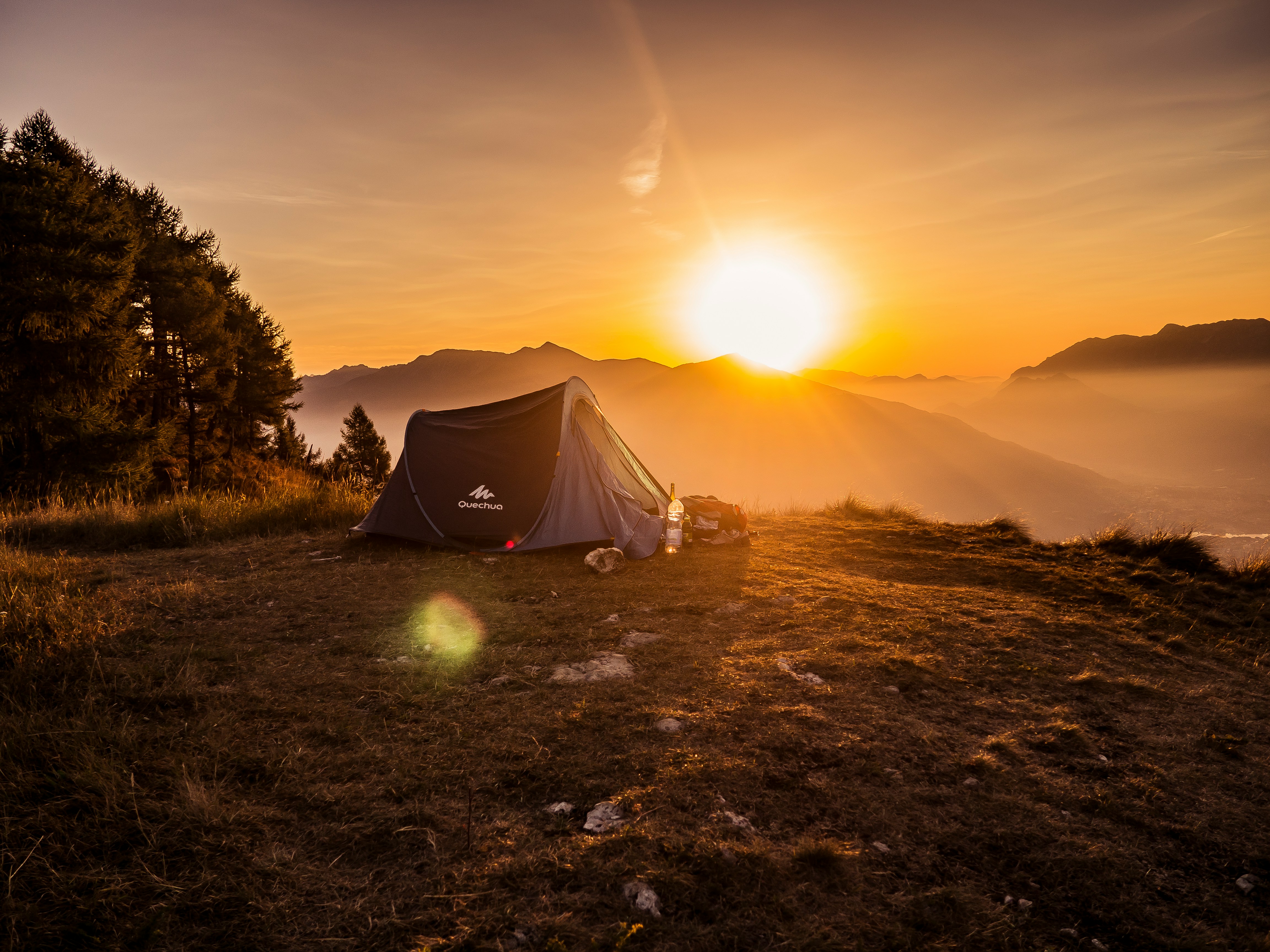
Set up your outdoor space. This is the part where it all starts to feel worth it. Chairs out, mat down, awning up if you have one. Pour yourself something cold, sit down, and look around. You did it. You are here.
A Good Home Base Matters
One of the best strategies for a first RV camping trip is to pick one campground and use it as your base rather than moving every single day. Moving the RV daily means packing up, driving, setting up again, and spending half your trip managing logistics instead of actually relaxing.
Lamb City Campground in Phillipston, Massachusetts — just 85 Royalston Rd — is the kind of place that rewards this strategy. It is set in the quiet central Massachusetts hills, which means real trees, real quiet, and the kind of dark sky at night that reminds you stars are still there even when you live in the city.
From Phillipston, you are within easy reach of the kind of small-town New England experiences that people drive hours to find. And because you are not moving the RV, you can take the car or truck into town, hit a trail, grab lunch somewhere local, and come back to your site without having to redo your whole setup.
If you are coming from the Boston area or looking for that connection point, the Boston, MA location page gives you context on the drive and what to expect heading out of the city into central Massachusetts. It is an easy trip — about 90 minutes — and the transition from highway to country road happens fast enough that you feel it.
Picking the Right Site
Not all RV sites are built the same. Here is how to choose:
For a short trip — a long weekend or a week — the RV site rentals at Lamb City Campground give you a solid base with hookups and the kind of space that makes your outdoor setup actually functional. You are not parking bumper to bumper with strangers. You have room to breathe.
If you find yourself coming back to the same campground every summer — and with Lamb City, that happens a lot — seasonal RV sites are worth looking at seriously. You leave your RV set up for the whole season, come back whenever you want, and skip the whole setup and teardown cycle every single visit. For families especially, this changes the calculus on how often you actually get out camping. When the answer to "do you want to go this weekend?" is just "yes" instead of "yes but we have to pack everything and set up and..." — you go a lot more often.
Things to Do While You Are There
Central Massachusetts is not usually the first thing people picture when they think "New England vacation," but that is part of what makes it great. It is not overrun. The trails are quiet. The towns have actual character instead of being designed for tourists.
Hiking in the area around Phillipston gives you access to real forest without the crowds you find in more famous spots. The Tully Lake area is nearby and worth a day trip.
Fishing is a legitimate way to spend an afternoon in this part of Massachusetts. Bring a rod, find a quiet spot, and do absolutely nothing productive for a few hours. It is one of life's great pleasures.
Biking and walking around the campground itself is something people underestimate. When you are not rushing somewhere, just moving through a quiet wooded property at a slow pace does something good for your brain.
Day trips into the surrounding towns — Athol, Orange, Gardner — give you local diners, farm stands, and the kind of small-town New England atmosphere that city life makes you forget exists.
Beginner Mistakes to Avoid
You are going to make some mistakes your first trip. That is not a warning — that is just how it works. But here are a few you can skip:
Do not overplan. The temptation is to build an itinerary that accounts for every hour. Resist this. RV camping is supposed to be slower than regular life. Leave room for nothing.
Do not ignore your gray and black water tanks. When they are full, they are full. Check them regularly and dump at the appropriate station before they become your entire focus for the afternoon.
Do not forget the basics. Paper towels, dish soap, a can opener, a flashlight that actually has batteries — the things you never think about at home are the things you will really miss when you do not have them.
Do not wait for the perfect conditions. There will always be a reason to postpone. The weather could be better, the timing could be better, you could have more money saved. At some point, you just go.
You Are Ready
Here is the truth about RV camping in New England: the first trip is always the hardest, and it is still usually pretty great. You figure things out as you go, you get better at the setup, and somewhere around day two you stop thinking about everything you forgot to bring and start just being there.
New England will meet you halfway. The scenery does the heavy lifting. All you have to do is show up.
Ready to book your first RV camping trip in New England? Visit Lamb City Campground at 85 Royalston Rd, Phillipston, MA 01331 to check site availability. Whether you are looking for a short-term RV site rental for your first trip or thinking about a seasonal RV site for the whole summer, there is a spot here with your name on it. Come see what New England camping is supposed to feel like.